Titanic postcard material is more varied than many collectors first expect. Some cards are memorial pieces issued after the sinking. Others are promotional images tied to White Star presentation and passenger publicity. A smaller group survives mainly through archives, institutional collections, or collecting references rather than easy, publication-safe scans. For a broader evidence-first discussion of what surviving objects can and cannot prove, see Titanic Artifacts: What Survives and What Doesn’t.
⁂ Curator’s note: This page is organized as a documented gallery, not a blanket claim that every image ever sold as a “Titanic postcard” is authentic. Inclusion here should rest on period attribution, identifiable provenance, institutional custody, or strong collecting context—not on marketplace description alone. That same evidence-first discipline also shapes pages like What Titanic Teaches About Evidence and Titanic Myths That Persist.
IncludedPeriod postcard material
Memorial cards, disaster postcards, ship-profile postcards, and White Star promotional imagery with usable historical grounding.
ExcludedModern fantasy material
Reproductions, AI-made images, decorative souvenir cards, and unattributed marketplace scans should stay outside the core gallery.
MethodProvenance over appearance
A convincing period look is not enough. Collection history, captions, repository context, and print type matter.
How to read this gallery
Titanic postcard culture can be divided into a few distinct streams. Memorial and disaster postcards reflect public mourning, spectacle, and rapid image circulation after April 1912. Ship-profile postcards fix the vessel itself into a collectible image. Promotional cards sit closer to White Star publicity and the visual language of prestige shipping. Those differences matter because they affect not only collecting value, but also how Titanic moved from event into memory, a process explored further in What the World Knew and Titanic Myths That Persist.
Memorial & disaster postcards
These cards belong to the immediate visual aftermath of the sinking. They are often the most emotionally direct objects in a Titanic postcard gallery, but they also require careful differentiation between period issue and later reproduction. They work especially well alongside What the World Knew, since both show how Titanic entered public consciousness almost immediately through unstable but highly memorable print culture.
A strong anchor image for the disaster section: a printed postcard image showing the sinking with lifeboats escaping. This is exactly the kind of fast-circulating visual culture that helped turn Titanic into immediate mass-memory material.
Provenance note: Uses the Commons file titled Titanic sinking(postcard), identified there as a 1912 postcard image.
Source page
This is a strong companion to the sinking postcard above because it shows how Titanic disaster imagery could circulate in slightly different visual forms while still belonging to the same print-culture moment.
Provenance note: Best treated as a period disaster illustration within the postcard gallery’s broader memorial stream.
Source page
Ship-profile postcards
These are the postcard types many visitors expect first: Titanic represented as a ship, in profile or formal printed presentation. Alongside them sit some shared White Star promotional cards, where Titanic appears as part of a broader prestige program rather than as an isolated subject. Together, they help balance the gallery so it is not only about interiors and catastrophe. For the ship itself beyond postcard culture, see the Titanic ship guide.
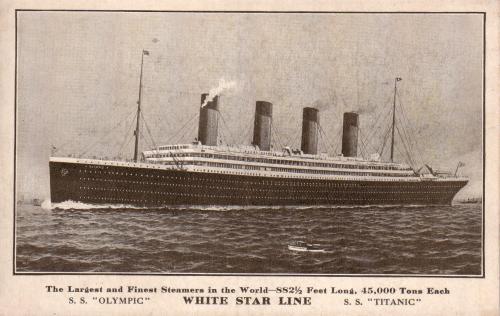
Date: 1912 · Type: photographic image used in postcard circulation
Many Titanic postcards were based on photographic originals like this. Even when not labeled as a postcard on the file page, these images formed the basis for widely circulated printed cards.
Provenance note: Well-documented Titanic photograph widely reproduced in period print media and postcards.
Source page
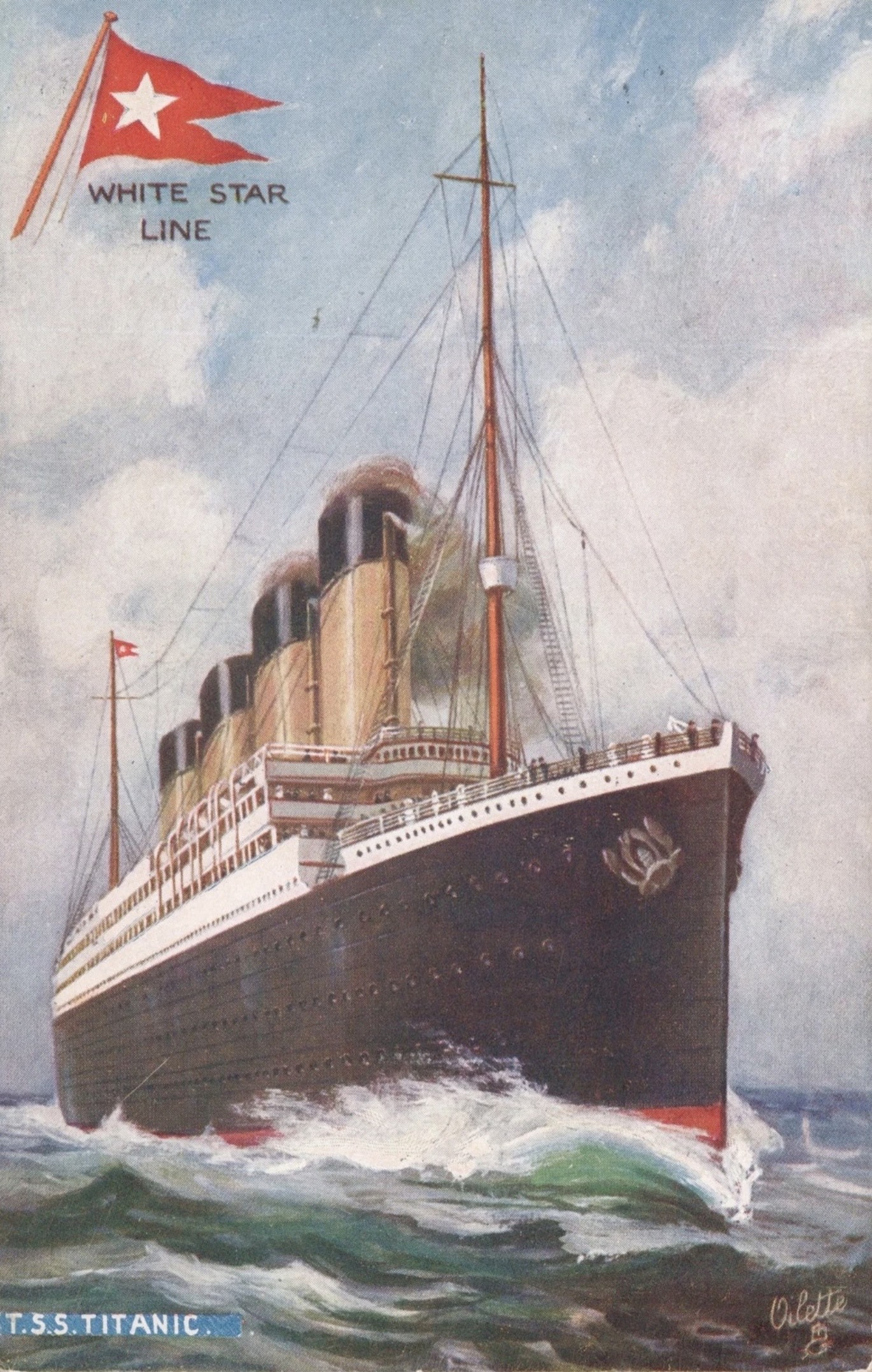
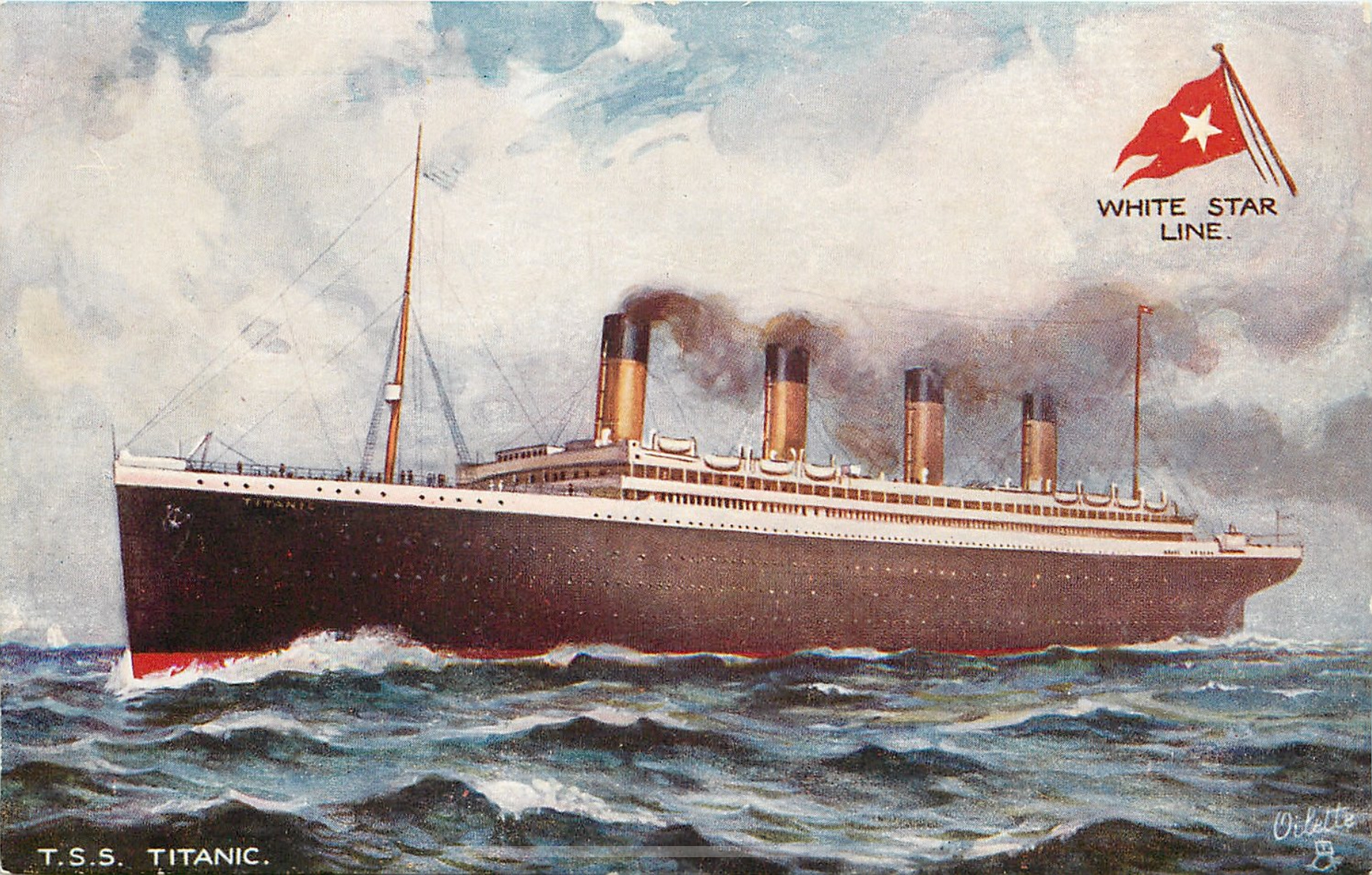
Raphael Tuck & Sons “Oilette” & Ship Portrait Postcards
These postcards represent some of the most recognizable mass-market imagery of Titanic.
Many belong to the “Oilette” tradition—painterly, idealized ship portraits designed for visual appeal and wide circulation.
Others reflect closely related illustrated postcard styles that presented the ship as spectacle, scale, and symbol.
OiletteRaphael Tuck & Sons
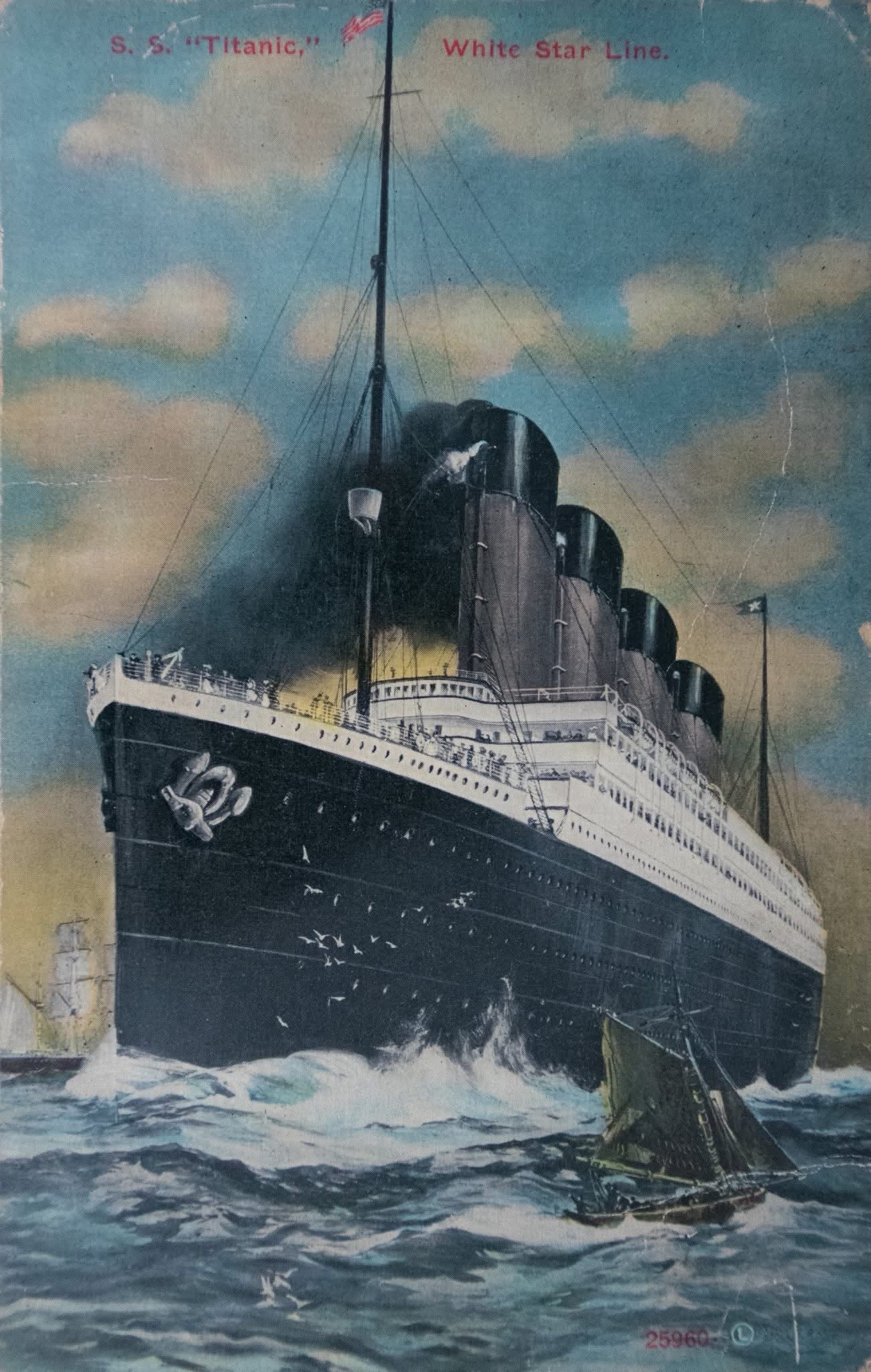
Titanic (Bow View, Oilette Style)
A dramatic forward-angle depiction emphasizing scale and motion. The Oilette style presents Titanic as both engineering achievement and visual spectacle.
OiletteRaphael Tuck & Sons
Titanic (Profile, Oilette Series)
A clean, idealized side-profile representation. This format became one of the most common ways ocean liners were visually standardized in postcard culture.
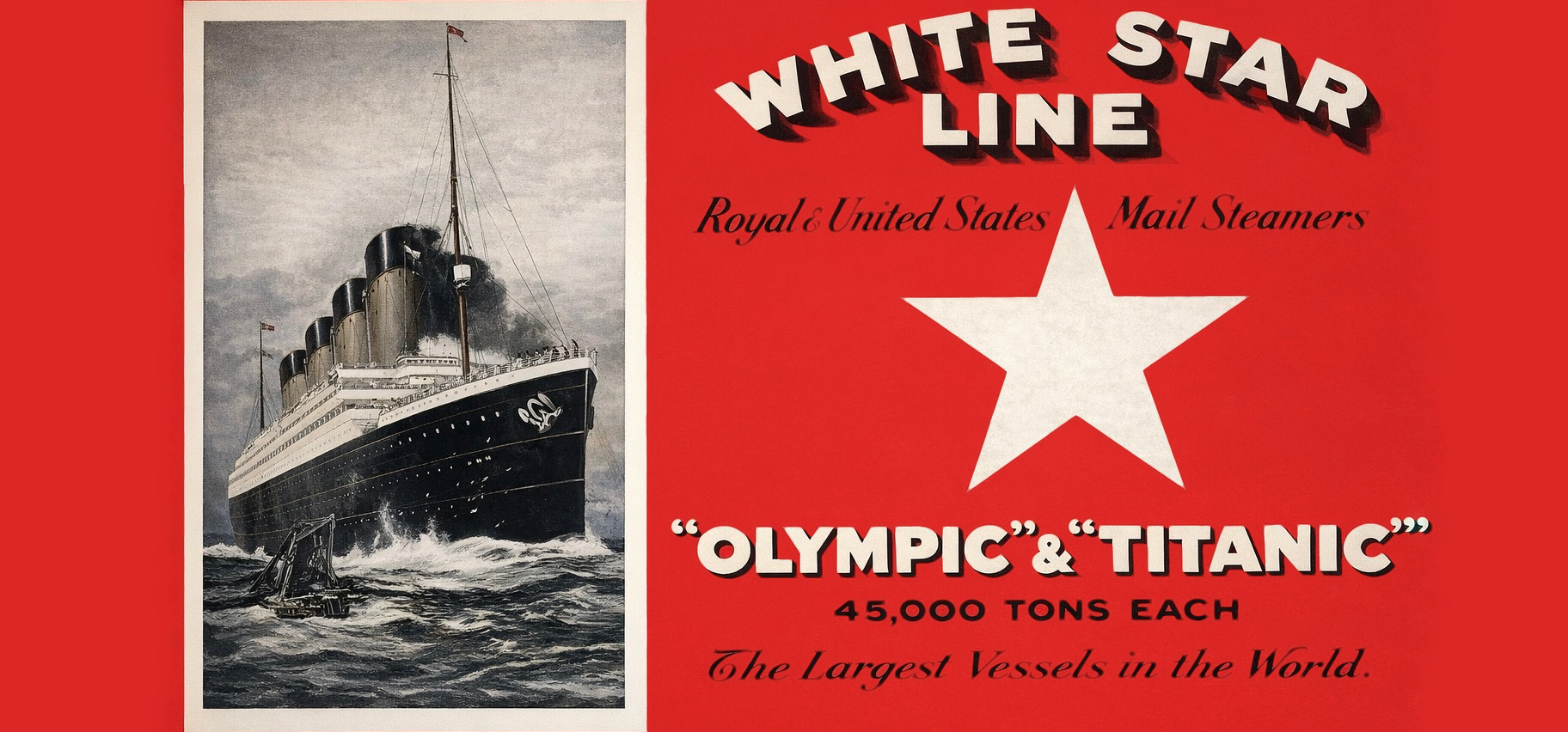
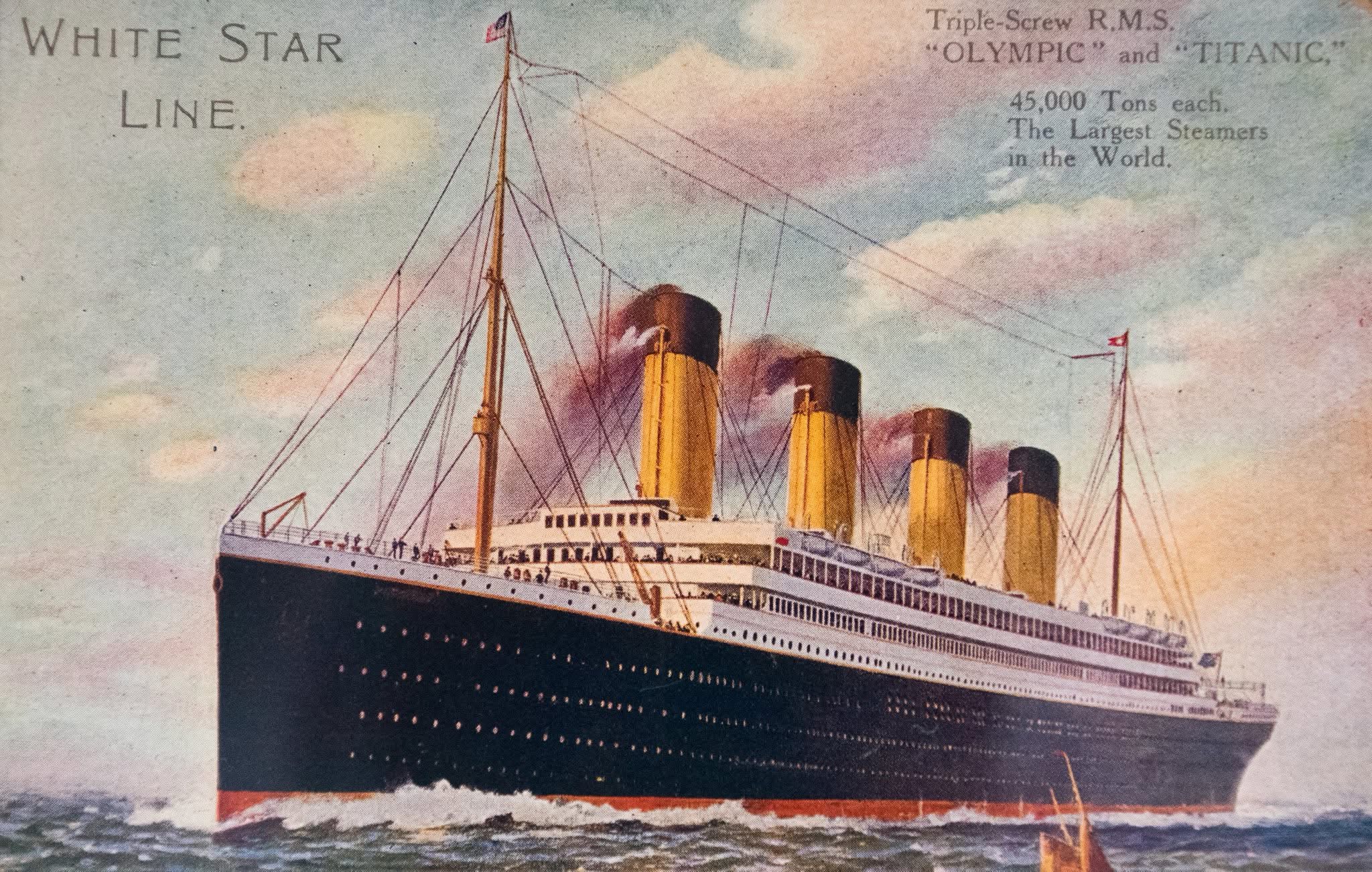
AdvertisingWhite Star Line
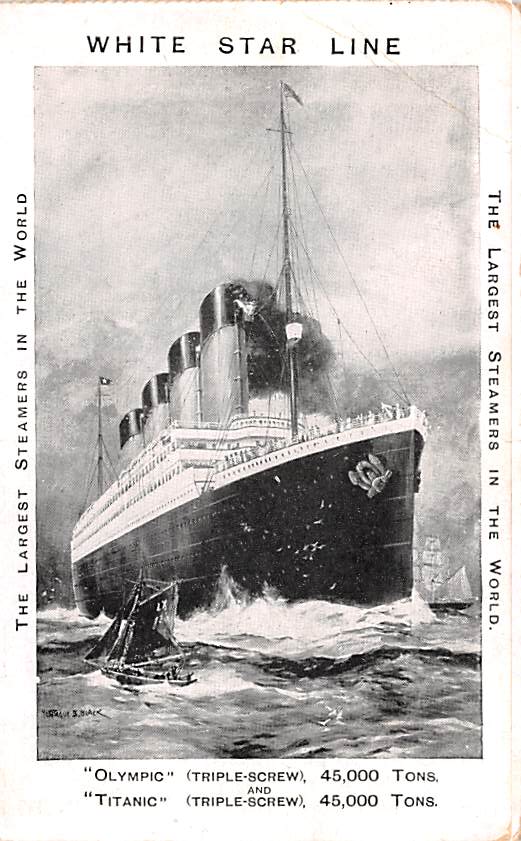
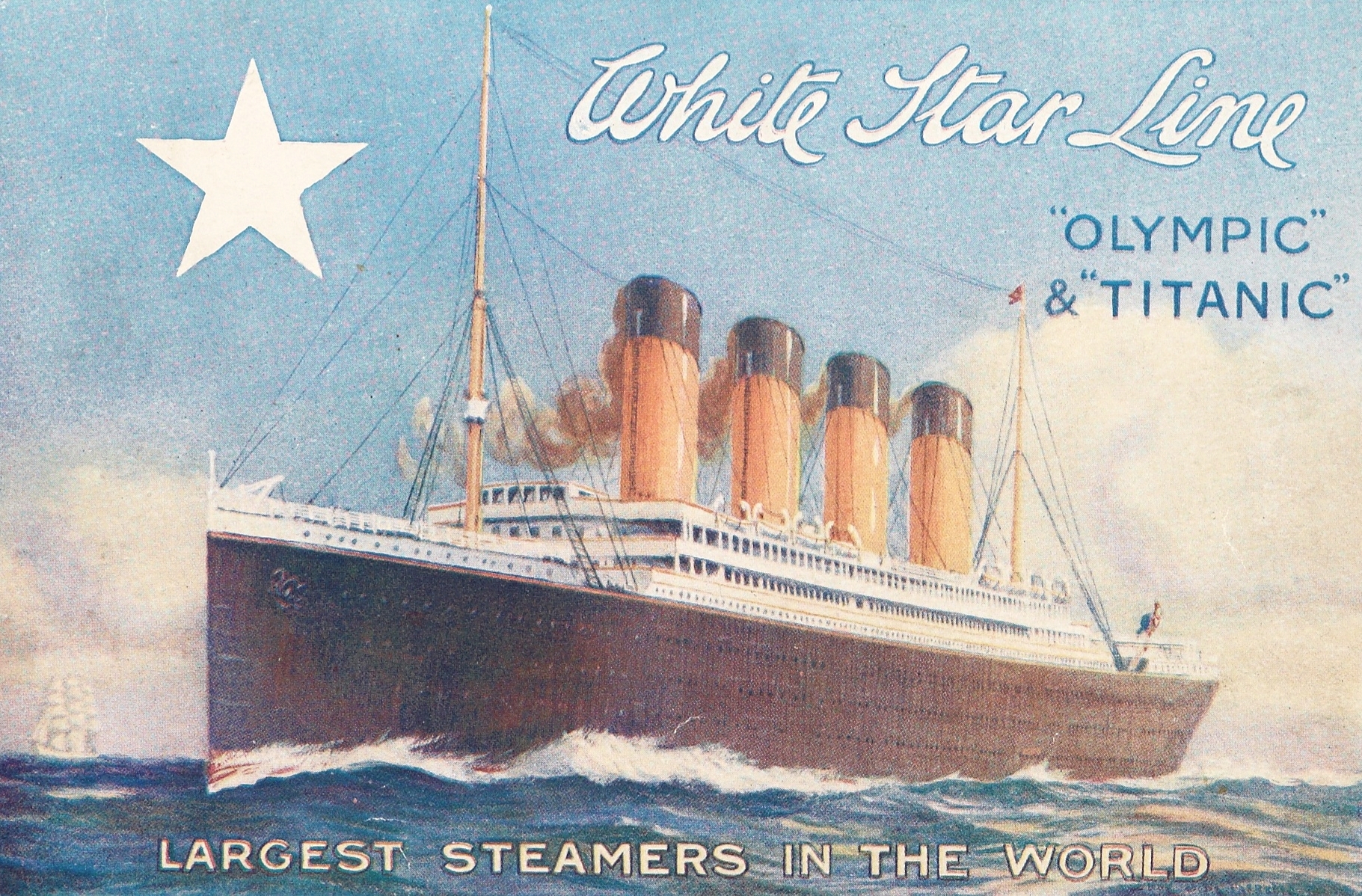
Olympic & Titanic Promotional Card
A hybrid promotional postcard combining both Olympic and Titanic. These images helped position the ships as the largest and most prestigious liners afloat.
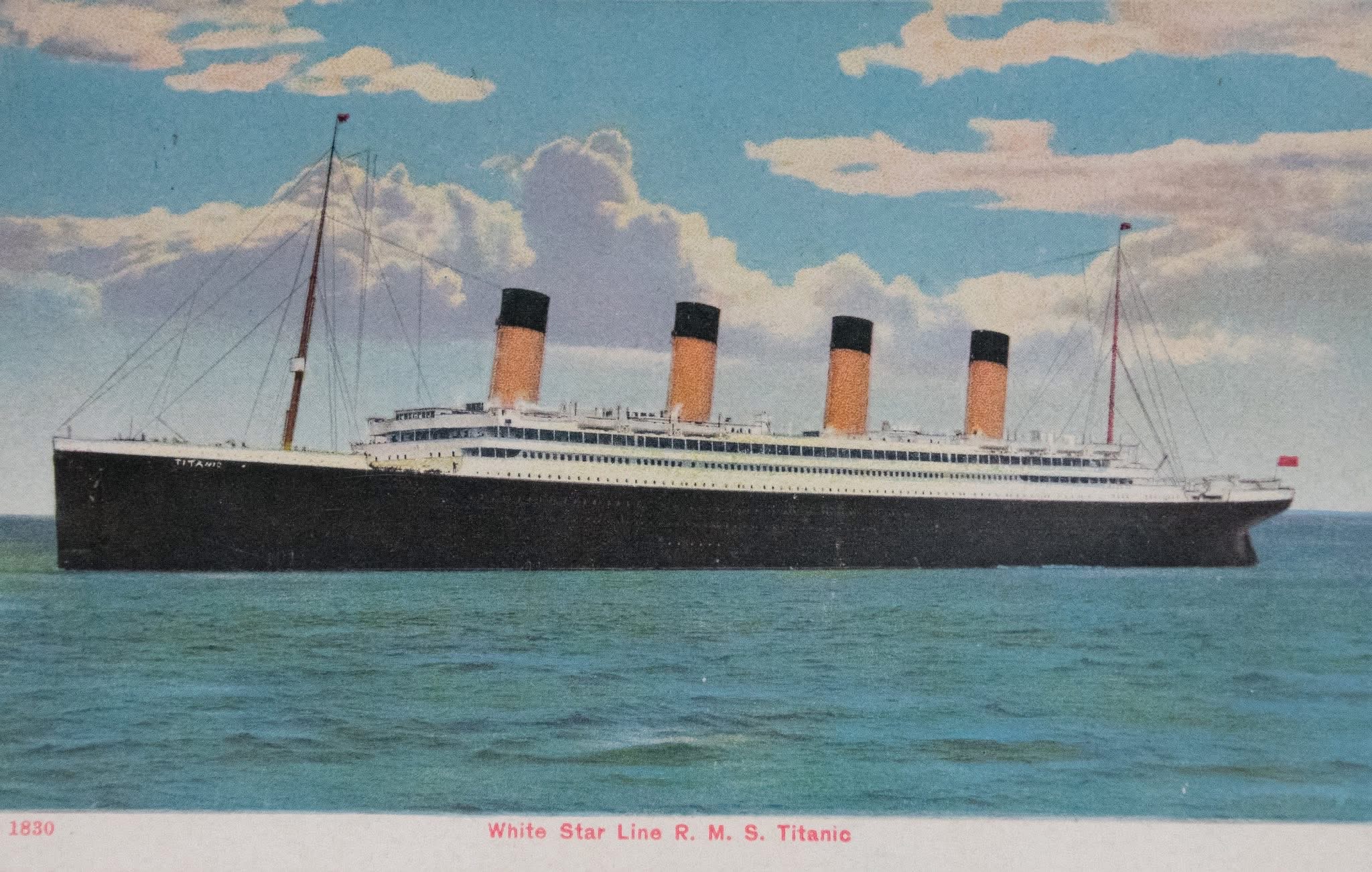
Ship profileNumbered series
Titanic (Profile No. 1830)
Numbered postcard series like this reflect organized commercial print runs, standardizing Titanic’s image into repeatable, widely distributed formats.
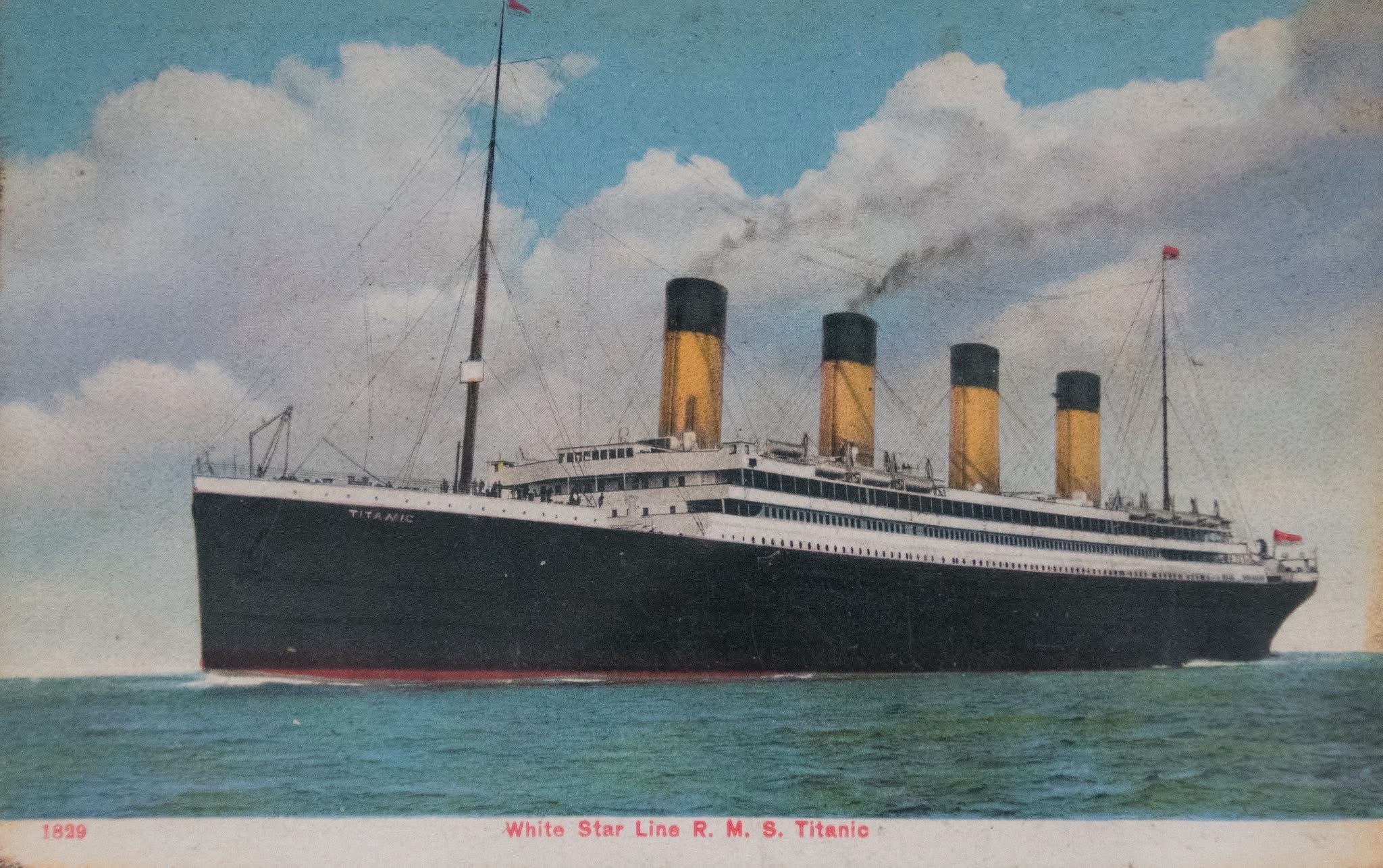
Ship profileNumbered series
Titanic (Profile No. 1829)
Closely related to other numbered postcard sets, this version varies slightly in coloration and rendering, illustrating how Titanic’s image was subtly reinterpreted across print runs.
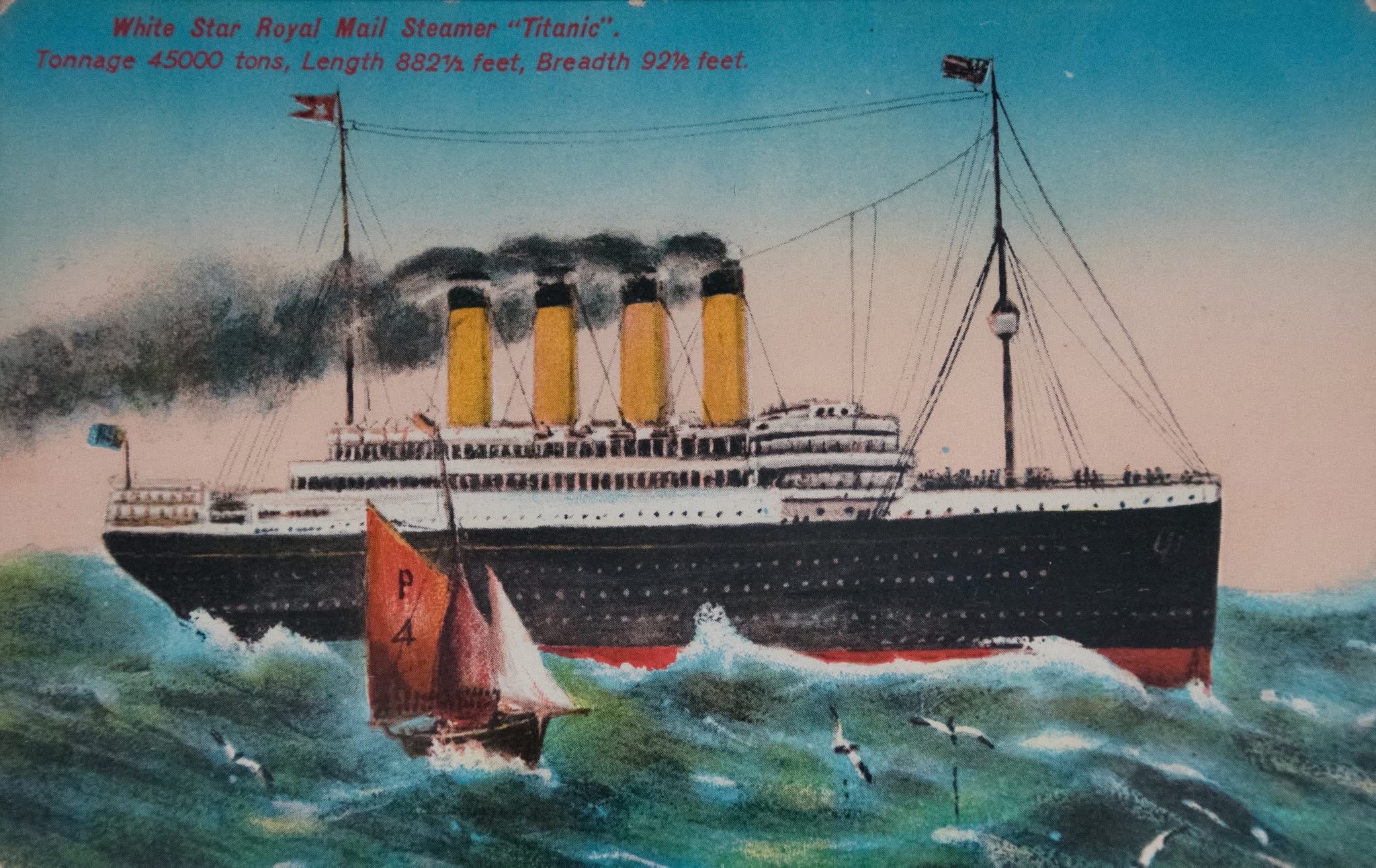
IllustratedMass-market
Titanic (Illustrated Bow View)
This type of illustrated postcard emphasizes motion, scale, and drama rather than strict technical accuracy, reflecting public fascination with the ship’s size and power.
IllustratedVariant
Titanic (Bow View Variant)
Variants like this show how a single visual concept—Titanic advancing toward the viewer—was reproduced across multiple designs and publishers.
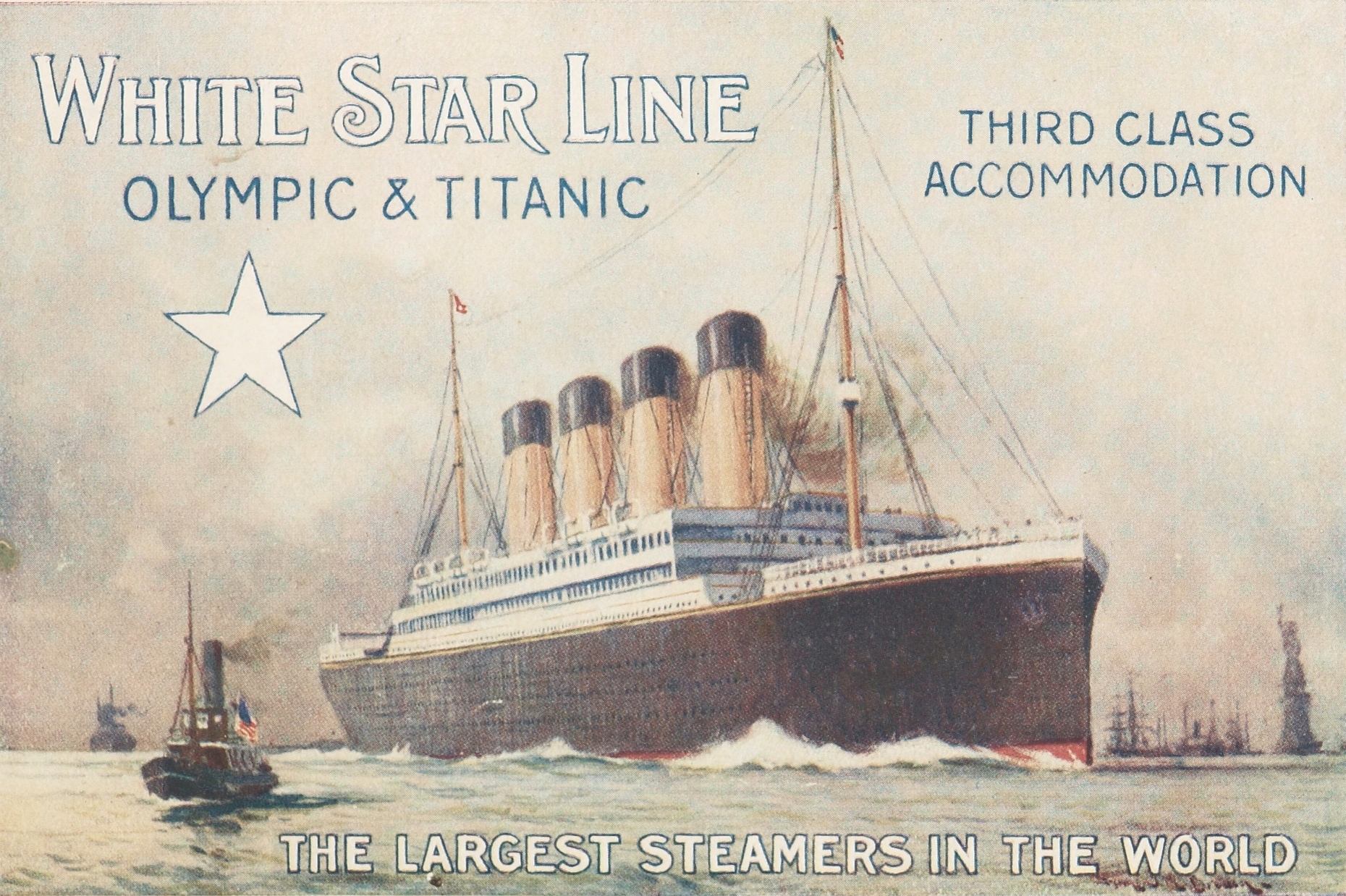
AdvertisingShared Olympic/Titanic
White Star Line — Olympic and Titanic
This postcard is especially useful because it places Titanic within White Star’s broader prestige campaign rather than presenting her alone. The printed text identifies both Olympic and Titanic and frames them together as the largest steamers in the world.
Ship profileTitanic named card
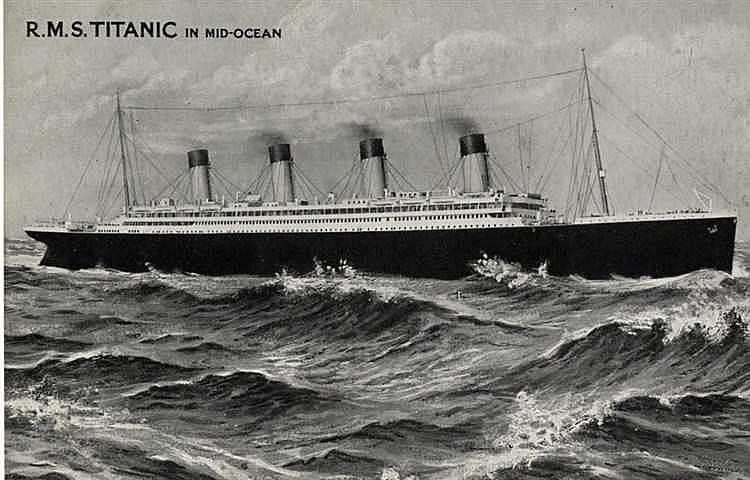
R.M.S. Titanic in Mid-Ocean
This is exactly the kind of ship-at-sea postcard that helps balance the page. Instead of an interior or disaster image, it presents Titanic as a liner underway in open water, with the ship named directly on the face of the card.
White Star promotional postcards
These cards shift the tone entirely. Instead of mourning, they present Titanic through the language of comfort, prestige, modernity, and interior design. Many of the strongest surviving examples are shared Olympic/Titanic promotional illustrations, which should be labeled that way rather than overstated as uniquely Titanic-only views. They also connect naturally to Titanic’s Most Famous Public Rooms, where those same interiors are interpreted in architectural and social context.
PromotionalCommons-backed
Titanic & Olympic 1st Class Reception Room
Approx. date: circa 1910–1911 · Type: White Star promotional postcard · Subject: first-class interior
One of the best gallery inclusions available: a contemporary color illustration used to advertise first-class facilities aboard Olympic and Titanic.
Provenance note: Labeled on Commons as a White Star promotional illustration for Olympic and Titanic.
Source page
PromotionalOlympic-class reference
Reading & Writing Room
Approx. date: Titanic era · Type: Olympic-class interior postcard/reference · Subject: first-class lounge space
A useful gallery piece that should be labeled carefully. The surviving Commons file is identified as Olympic’s Reading & Writing Room, making it a strong Olympic-class reference rather than a ship-exclusive Titanic card.
Provenance note: Explicitly identified on Commons as Olympic’s Reading & Writing Room.
Source page
PromotionalCommons-backed
Titanic & Olympic 2nd Class Library
Approx. date: circa 1911–1912 · Type: White Star promotional postcard · Subject: second-class interior
A particularly valuable addition because it broadens the gallery beyond first-class glamour. It shows how Titanic and Olympic were marketed to passengers through comfort and order.
Provenance note: Described on Commons as a White Star promotional illustration for Olympic and Titanic.
Source page
PromotionalCommons-backed
Titanic & Olympic 2nd Class Dining Room
Approx. date: circa 1910–1912 · Type: White Star promotional postcard · Subject: second-class interior
Not every desirable Titanic postcard needs to show the ship externally. Some of the best period printed material documents the interior promise White Star wanted passengers to imagine.
Provenance note: Described on Commons as a White Star Line promotional illustration for Titanic and Olympic.
Source page
PromotionalPeriod image
Café Parisien
Approx. date: 1912 · Type: period interior image in postcard gallery context · Subject: specialty venue
This is exactly the kind of Titanic image that belonged to the ship’s promotional visual ecosystem and works beautifully in a curated postcard gallery.
Provenance note: Commons identifies this as the Café Parisien aboard Titanic.
Source page
A slightly different kind of gallery entry: a presentation image rather than a simple photographic postcard. It still belongs here because it reflects Titanic’s printed promotional world.
Provenance note: Commons identifies this as Titanic’s First Class Restaurant Reception area.
Source page
Titanic did not circulate only through postcards. White Star Line and related publishers also promoted the ship through brochures, pamphlets, comparative advertising, and larger-format printed material. These pieces broaden the gallery from collectible postcard imagery into the wider printed world that helped present Titanic as a modern prestige liner.
PamphletPrinted ephemera
White Star Line Pamphlet Featuring Titanic
Type: promotional pamphlet · Subject: line advertising or passenger information
Pamphlets like this help show how Titanic was marketed beyond simple postcard imagery. They often carried richer descriptive language, service framing, and broader White Star branding.
Provenance note: Best used for material with visible White Star branding, route information, sailing information, or printed promotional copy tied to Titanic or the Olympic class.
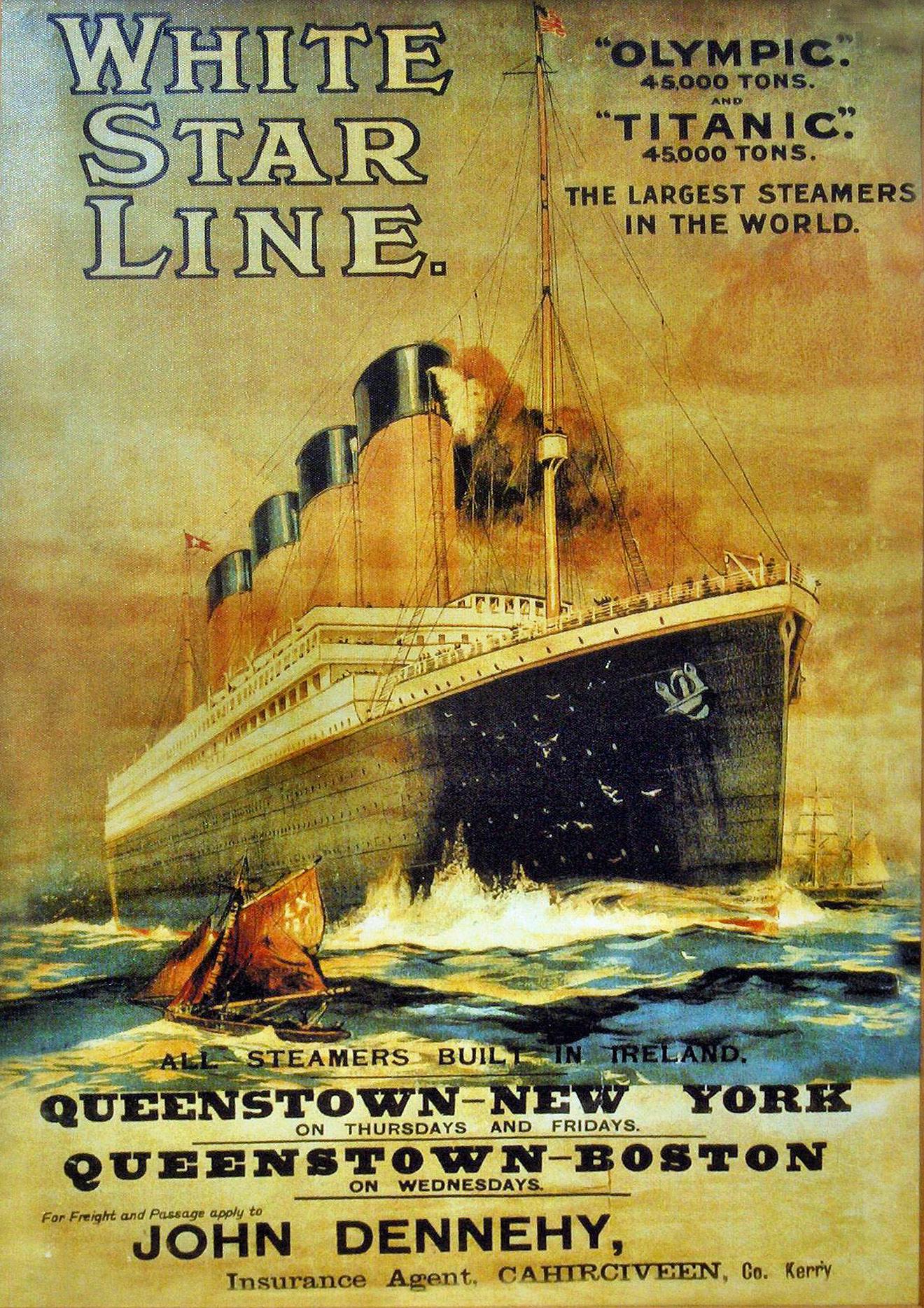
PosterAdvertising
Poster-Style Titanic Promotion
Type: poster or poster-style advertisement · Subject: prestige marketing
Larger-format promotional printing emphasized grandeur, modernity, and prestige. These pieces often pushed Titanic beyond collectible format and into broader commercial advertising culture.
Provenance note: Label carefully if the item is Titanic-specific, Olympic/Titanic shared, or general White Star advertising that used the Olympic class as a prestige symbol.
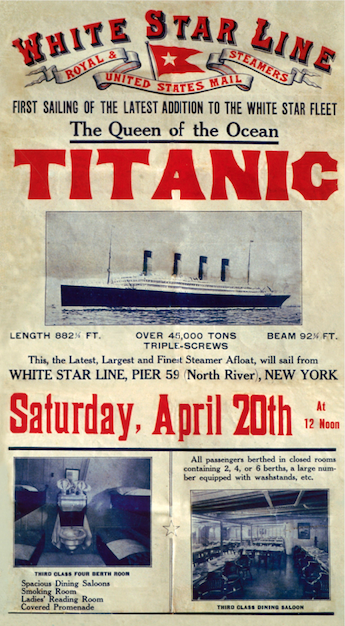
LeafletPassenger material
Booking Leaflet or Sailing Notice
Type: leaflet or circular · Subject: passenger-facing printed material
Passenger-facing leaflets are especially valuable because they connect Titanic’s image to practical travel culture: booking, departure, accommodation, and route presentation.
Provenance note: These pieces are most convincing when they retain printed fares, dates, route text, or White Star identifiers rather than surviving only as detached illustrations.
Not all useful Titanic material isolates Titanic alone. Some of the most revealing promotional print pieces present Titanic as part of White Star’s broader Olympic-class prestige campaign.
Provenance note: Best framed explicitly as shared Olympic/Titanic promotion rather than ship-exclusive Titanic ephemera.
Why postcard galleries matter
Treated carefully, they can show not only what Titanic looked like, but how Titanic was marketed, mourned, circulated, and remembered in print. That makes them useful not just for collectors, but for understanding how evidence, publicity, and myth interact across Titanic’s afterlife—especially alongside What Titanic Teaches About Evidence.
Treated carefully, they can show not only what Titanic looked like, but how Titanic was marketed, mourned, circulated, and remembered in print.
Curator’s takeaway: The strongest Titanic postcard gallery is not the largest one. It is the one that distinguishes memorial cards from promotional cards, ship-profile views from interior publicity, documentary material from fantasy, and attractive scans from truly grounded evidence.
Continue Exploring Titanic
These pages help place postcard material back into the wider worlds of evidence, memory, interiors, and the ship itself.
This gallery template is built around an evidence-first standard: use identifiable period postcards and archival or institutional examples where possible, label rights and provenance clearly, and separate publish-safe images from reference-only material when certainty is limited.
.jpg)




.jpg)


